Over the past week and a half, two weeks or so, I've begun actually teaching classes. They began as co-teaching with the existing teacher, but a few are moving into "my class" territory. I'm also covering several classes for teachers going on leave in December. I have about 13 classes over the course of a week.
That's a lot for a new teacher, at least at this school. A couple of my coworkers have said that they started with just two or three, and gradually added more. I arrived at the perfect time to be really needed, so I've been kinda pushed into the deep end. Which is generally how I like it. The downside is, these are classes that need full planning and I still take a fair amount of time to plan a class. The result is, I'm going to be putting in a lot of time in the office just trying to get my classes planned and ready, likely going in on my days off to be prepared.
It is what it is. I believe the pay structure at the school will actually give me some overtime for all these hours. So that's good.
I've taught about 8 of my own solo classes up to this point. Some have gone really well, some have gone horribly. Interestingly, very few have been anywhere in the middle. I expected the range to be closer to average.
China's "One-child policy" was implemented in 1979, after about ten years of a two-child policy. In essence, many Chinese families were restricted to having only one child, with two allowed in some cases where the first was a girl. Because China is a patrilineal society, families with only a girl meant the end of the family line as culturally recognized. There are several cultural effects from such a policy, and it's a pretty interesting read, but the more important to my situation is that China went from having fairly large families to having extremely small ones, with many/most in cities having only one. The last cohort of children born before the policy went into effect are now approaching middle age, having raised their children as "singletons" (a word I only learned today while researching this post). The typical degree of attention and care provided several children is now focused entirely on one, who bears effectively the entire weight of the family line.
To put it simply, Chinese children are horridly spoiled.
As a teacher, I have to deal with classes of singletons; where most teachers have to deal with a few here and there, that's basically all I have. It makes teaching, especially in the early pre-adolescent years from 6-11 or so, very challenging, as the children are beginning to develop their sense of self and independence, and are used to being the center of attention and getting their way.
For the most part, my classes aren't terrible. They're still children, and most understand the concepts of taking turns, sharing, working together, and so on. Many still have a basic respect for authority, and the school works to develop individual motivations and goals so that they are internally driven to learn, and by extension, to pay attention and behave. I have some tools as a teacher that I can use to reinforce discipline and behavior.
All doesn't mean that the worse kids can't be extremely disruptive, and that there is sometimes nothing you can do to actually control them.
It'll come with time - I'll develop better methods, build rapport with my own classes, and so forth. I'll find what works and what doesn't, through experimentation and experience and advice from other teachers.
But in the meantime, I'm bracing myself for some very frustrating and disheartening experiences.
It's all part of the comfort zone eviction I gave myself several months ago when I started this journey.
Zaijian,
-L
Wednesday, November 28, 2018

Thursday, November 22, 2018
Happy Thanksgiving from China!
I am writing this at 9:40 PM China time, which is 7:40 AM on the morning of Thanksgiving Day. I greet you, people of the past. Your ways are quaint.
I have little to say at the moment, as there has been a lot going on at work and in life in general...but little of it is particularly interesting. Mostly it's tiring, and that means my energy to continue History Bites or explore other ideas/concepts/topics is quite insufficient.
Today I went to an American barbecue-style place, Texas Smoke Haus. They had a special Thanksgiving Dinner thing. Pretty much all the traditional trappings; green bean casserole, mashed potatoes, stuffing, gravy, cranberry sauce, Hawaiian rolls (how exactly did this become a Thanksgiving standard anyway?)...the dumpling-shaped thing in the top left corner is a fried apple pie. And of course the turkey, in the form of an enormous turkey leg. The coworker with whom I went commented that it was vaguely Renaissance Faire-esque.
Whatever it was, it was quite good, and I'll be wandering back that way to see how the rest of their food is. It'll be nice to find something familiar. I love Chinese food, and I've had very little here that I didn't like, but comfort food is comfort food and it's usually what you grew up eating.
Anyway. I wanted to put something up for Thanksgiving; it isn't celebrated here, of course (Christmas music started a couple days ago), but most of this blog's readers (and its author) being American, it couldn't exactly be passed up.
Zaijian!
-L
I have little to say at the moment, as there has been a lot going on at work and in life in general...but little of it is particularly interesting. Mostly it's tiring, and that means my energy to continue History Bites or explore other ideas/concepts/topics is quite insufficient.
Today I went to an American barbecue-style place, Texas Smoke Haus. They had a special Thanksgiving Dinner thing. Pretty much all the traditional trappings; green bean casserole, mashed potatoes, stuffing, gravy, cranberry sauce, Hawaiian rolls (how exactly did this become a Thanksgiving standard anyway?)...the dumpling-shaped thing in the top left corner is a fried apple pie. And of course the turkey, in the form of an enormous turkey leg. The coworker with whom I went commented that it was vaguely Renaissance Faire-esque.

Whatever it was, it was quite good, and I'll be wandering back that way to see how the rest of their food is. It'll be nice to find something familiar. I love Chinese food, and I've had very little here that I didn't like, but comfort food is comfort food and it's usually what you grew up eating.
Anyway. I wanted to put something up for Thanksgiving; it isn't celebrated here, of course (Christmas music started a couple days ago), but most of this blog's readers (and its author) being American, it couldn't exactly be passed up.
Zaijian!
-L
Wednesday, November 14, 2018
Scared Kids and Supermarkets
Yesterday was a momentous day: it's the day I first made a kid cry.
Now, that sounds bad. I didn't actually do anything. I'd been warned from time immemorial that a tall white stranger would often be enough to get a 3-year-old screaming. Frankly, I'm surprised it took this long. I'd expected it from my first day observing those classes, nearly four weeks ago now.
Something I appreciate more and more about America, as my time here progresses, is just how mingled we really are. White is still the majority, and may be for some time - we certainly have the cultural and financial majority. But it's not uncommon to see other races, to interact with them as children; to know they exist, not from stories or pictures, but from experience. For many of the students I'll teach, I will be their first encounter with a foreigner, and my moderately overweight, nearly 2 meter tall frame is daunting to someone barely above my knee. I understand the fear, I've braced for it, and so when it happened I felt more "I've arrived" than "I've hurt someone" or "I'm terrifying."
It's an interesting feeling.
As I didn't think the above story was enough content for its own post, I thought I'd share a bit of the supermarket world here. First, a comment again about how inexpensive food can be. This meal, for instance, works out to about $5 (30y). Most of that is the kebabs, which are 1.33y each (3 for 10y). The other things are called shuo zhua bing, literally "hand grab pancakes." A thin bread-like tortilla thing with an egg spread over it, some kind of sauce (one of those has ketchup and mayo, the other I don't know), stuffed with lettuce, onion, and cilantro (sausage optional - I actually tried to get one with sausage and one without but it was lost in the language barrier). I assume the sausage would bring the price up, but it'd still be notably affordable. Street food in general tends to be really cheap, and really tasty. When I'm more comfortable reading the symbols and words on the stalls/stands/carts, I'll probably eat more often at those than at restaurants. At least, while they still exist, until the winter freezes them out. I'll miss shuo zhua bing when that happens, as I'm not sure I can figure out how to cook them myself.
As usual, my posts are about food. Imagine that. Hey, this body takes work *pats large stomach*
This week, I encountered, for the first time since arriving, US pricing practices. You can see lower on the sign that many of the items are priced at a flat number. The Chinese yuan does split into decimals, though I've only once seen a hundreds place (e.g. one cent). Seeing tenths is less rare, with the half yuan (0.5) being fairly common. But I've gone nearly four weeks without seeing a "9.99" price. I didn't miss it. It's such a ridiculous practice.
As usual, I'm also intrigued by the varieties of familiar things. These are Bugles in flavors I've never even considered before. Much like the steak-flavored Cheetos from a few posts ago, the "normal" flavors just don't exist here, and instead are replaced by more unusual options.
Inside the supermarket here, I was struck by the presence of live seafood that you can buy. I assume they kill it behind the counter, never loitered long enough to see someone get any. It goes beyond fish, crab, and lobster, however, in some directions that I would not have guessed. Yes, those are sea cucumbers. I didn't even know those were edible, and here's an aquarium full of them for people to buy and cook at home.
I definitely won't be trying to do that any time soon.
Zaijian,
-L
Now, that sounds bad. I didn't actually do anything. I'd been warned from time immemorial that a tall white stranger would often be enough to get a 3-year-old screaming. Frankly, I'm surprised it took this long. I'd expected it from my first day observing those classes, nearly four weeks ago now.
Something I appreciate more and more about America, as my time here progresses, is just how mingled we really are. White is still the majority, and may be for some time - we certainly have the cultural and financial majority. But it's not uncommon to see other races, to interact with them as children; to know they exist, not from stories or pictures, but from experience. For many of the students I'll teach, I will be their first encounter with a foreigner, and my moderately overweight, nearly 2 meter tall frame is daunting to someone barely above my knee. I understand the fear, I've braced for it, and so when it happened I felt more "I've arrived" than "I've hurt someone" or "I'm terrifying."
It's an interesting feeling.
As I didn't think the above story was enough content for its own post, I thought I'd share a bit of the supermarket world here. First, a comment again about how inexpensive food can be. This meal, for instance, works out to about $5 (30y). Most of that is the kebabs, which are 1.33y each (3 for 10y). The other things are called shuo zhua bing, literally "hand grab pancakes." A thin bread-like tortilla thing with an egg spread over it, some kind of sauce (one of those has ketchup and mayo, the other I don't know), stuffed with lettuce, onion, and cilantro (sausage optional - I actually tried to get one with sausage and one without but it was lost in the language barrier). I assume the sausage would bring the price up, but it'd still be notably affordable. Street food in general tends to be really cheap, and really tasty. When I'm more comfortable reading the symbols and words on the stalls/stands/carts, I'll probably eat more often at those than at restaurants. At least, while they still exist, until the winter freezes them out. I'll miss shuo zhua bing when that happens, as I'm not sure I can figure out how to cook them myself.

As usual, my posts are about food. Imagine that. Hey, this body takes work *pats large stomach*
This week, I encountered, for the first time since arriving, US pricing practices. You can see lower on the sign that many of the items are priced at a flat number. The Chinese yuan does split into decimals, though I've only once seen a hundreds place (e.g. one cent). Seeing tenths is less rare, with the half yuan (0.5) being fairly common. But I've gone nearly four weeks without seeing a "9.99" price. I didn't miss it. It's such a ridiculous practice.

As usual, I'm also intrigued by the varieties of familiar things. These are Bugles in flavors I've never even considered before. Much like the steak-flavored Cheetos from a few posts ago, the "normal" flavors just don't exist here, and instead are replaced by more unusual options.

Inside the supermarket here, I was struck by the presence of live seafood that you can buy. I assume they kill it behind the counter, never loitered long enough to see someone get any. It goes beyond fish, crab, and lobster, however, in some directions that I would not have guessed. Yes, those are sea cucumbers. I didn't even know those were edible, and here's an aquarium full of them for people to buy and cook at home.


I definitely won't be trying to do that any time soon.
Zaijian,
-L
Monday, November 12, 2018
Semisocialite
The following is my best attempt at a translation of a conversation I had in the elevator today. C is a Chinese man who got on a few floors beneath mine.
[L is re-positioning a light on the roof of the lift that had fallen out of its housing]
C: You're tall.
L: [awkward smile]
C: Two meters?
L: One hundred nine six [I said 'nine' instead of 'ninety' but in three digit numbers you can usually omit just fine]
C: oh wow. You play basketball? [I guessed this because he went on to mime shooting a basketball]
L: No.
C: <<unknown>>
L: Don't understand.
C: Chinese.
L: No, can't speak.
C: You speak very well. Goodbye!
L: Goodbye.
L: Goodbye.
A lot of the language barrier can be crossed by gesture and tone, even in a tonally-dependent language like Chinese. One of those "more in common than separates us" things. I don't know the word for 'tall,' or the word for 'basketball,' or 'meters,' but context can provide a lot.
The phenomenon is, at least in part, the origin of the idea of "high context" cultures. It expands on the observation that verbal communication is only a small part the words actually said. For low-context cultures, the words carry more of the weight; conversely, high-context cultures rely on situational factors to convey and support meaning. English-speaking countries like the US tend to be low-context cultures, though there is variation even there (the page linked above lists the Southern United States as being higher-context than average). China is particularly high-context, as is Russia. This is reflected in their languages: in Chinese, a single tonal change can shift the meaning of a sentence drastically. A co-worker at my last job was fluent in Chinese, and his favorite example was that the sentences "I enjoy eating Chinese food" and "I enjoy eating dog poop" are one tone change apart.
Obviously, nobody who makes that mistake is assumed to be expressing the latter.
In my brief studies of Russian, it's been suggested that word order is entirely irrelevant. Latin was very much the same - while there were conventions, the complexity of conjugation and subject-preposition agreement meant that words could be ordered in any way and the actual meanings would still be decipherable. For another example, I studied American Sign Language for a year; ASL is among the higher-context languages out there, as I imagine most sign languages are, as the limited number of possible distinguishable gestures and the lack of centralization in the language would make it difficult for two Deaf people from different parts of the country to communicate on a low-context level.
The greatest asset a TEFL teacher has, then, is that working in a high-context culture means that gesture, mime, tone, and expression carry more of the meaning they are accustomed to taking in than the words themselves; this allows teachers to communicate ideas, directions, and language structures without needing to use the students' L1 (native or original language, as opposed to L2, the additional language they are learning or speaking).
I had heard the term 'high-context culture' before, but never truly understood it. Turns out it's another part of this great puzzle to me, the connection between culture and language. I hope to study it further someday, possibly to the extent of getting a second Bachelor's in Linguistics and/or Cultural Anthropology.
Regardless, my growing (but very young) knowledge of Chinese is allowing me to have more interactions with local folks thanks in part to the degree of context in Chinese language and culture.
There's something interesting to me about the fact, then, that Chinese schools tend to be very stoic. Children are taught facts and expected to recite them, rather than taught concepts and allowed to explore them. There's a similar element at play in American schools, which many have pointed to as training students for work in production/labor environments. Given the impetus China has placed on industrialization (indeed, it was a major part of its emergence onto the world stage), it's understandable that this would be the approach...but it does limit the potential of the growing generation and their place in the future workplace.
As citation for this, I can only say that it is the word of multiple local teachers I've spoken to on the matter. People who grew up in that system, and have seen another through the influx of foreign teachers.
It leads me to once again wish that we could stop allowing our differences and our pride to prevent all the progress we could make as a race, if we'd just stop shouting and start listening, stop taking and start sharing.
I'm such a hippy.
For lunch today, I went to a restaurant in the food court of the nearby mall. Every table was full, and there were one or two groups of people waiting for a table. As one of the employees looked around for a seat, a middle eastern-looking man waved me over - he was eating alone and had an open chair. I thanked him and sat down, and he proceeded to help me order and interpret for the employees. His name is Abe, and he's been in Harbin for eleven years; he earned his Master's and now teaches Hospitality Management at the University level. He's fluent in English and Chinese, and I assume Arabic, being originally from Yemen. He has stayed in Harbin because he finds the welcoming, appreciative attitude most Chinese people have towards foreigners as being a wonderful environment. He said, "when people learn you are a foreigner...you can be here for eleven years, I've been here eleven years and people still see a foreigner...they see you as someone coming to give them something. As a teacher, they will appreciate and respect you because you are bringing something, enriching them. It's a very loving atmosphere."
Lacking sufficient language to interact personally with almost anyone I meet from China, I haven't really experienced that yet - but I have sensed very little hostility or rejection for my nationality. Mostly just awe and some intimidation for my height, and sometimes a sense of frustration or disappointment that they cannot (yet) communicate with me.
I'm looking forward to changing that.
In closing, an interesting story and a quick photo dump. One of the other American teachers I've met here is a remarkably adventurous person. She is one of those "experience everything you can" types. We had lunch together the other day at a restaurant neither of us had tried; a 'hot pot,' which is basically Chinese fondue. Where I'm still trying to use what few symbols I recognize and words I know to order recognizable food, she simply pointed at lines on the menu and said "this one." She didn't know either.
Which is how I ended up trying brains for the first time. They aren't really recognizable as brains after cooking, but it was quite clear on the original plate. I'd love to report how brains taste, but the texture was so...unusual, that I couldn't even get it on my tongue before my body sorta rejected it. Still, points for trying things.


China is an excellent place to try new things, because everything is comparatively very cheap. This meal, for example, was the equivalent of about $6; two small chicken sandwiches, two wing-size drumsticks, fries, and a coke. Easily 10-12 in America. This is the best example I've been able to clearly document so far. I plan to hit up a night market sometime soon and track a few of my purchases, produce and meat and such, and I'll report back then. First I need to learn how to communicate and understand weights.

And finally, another instance of less than successful translation.

Zaijian,
-L
Saturday, November 3, 2018
Transplanted
Nearly two weeks have passed since my last update. I have no excuse.
Well, I have several. But in the end, I haven't updated again because I haven't chosen to. Inertia can be an interesting experience, but it is by nature self-perpetuating.
I can't (and never have attempted to) promise any kind of posting regularity. At least, not until I get my life more in order - particularly once I've rebuilt my desktop computer and situated a comfortable desk setup. And those are unlikely to be anytime before the end of November, as I am on limited funds until then.
Still. I can post now, having had some time to settle in and get my foster kitten situated. I've called her Second, like the time measurement, as the Chinese word for second is miao.
I'm a dork.
But in my time here, I've found some interesting variations on familiar things, some nigh-indescribable things (those are basically banana-flavored cheetos), really just a whole host of new foods. In clockwise order: hot pot flavored potato chips, snack pancakes with banana pudding filling (banana pudding features prominently in snack pastry here), prawn flavored puffed corn (just as odd as it sounds), regular Oreos, 3+2 Hawthorne, 3+2 cheese, and what basically amounts to asian-seasoned Chex cereal.
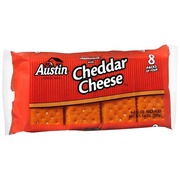
3+2 is an interesting snack brand. Hawthorne is a berry much like strawberry, in that it is extremely prevalent in sweets around here. Hawthorne 3+2 is three Ritz crackers sandwiching two layers of sickly sweet berry flavored frosting. 3+2 Cheese is more or less Cheese crackers made with saltines, but slightly sweeter.
American convenience stores have a wide variety of a small handful of items (potato chips in 8 flavors from three different companies, chocolate bars from four different brands, etc). Chinese convenience stores take that variety out of branding and into the selection itself; there aren't a lot of flavor alternatives for any given thing, just new and different stuff. A lot of it quite odd.
I cannot depart from the topic of food finds without these (Not Safe For Work) cakes I found at a normal cake shop in the mall.
I've also seen in China plenty of questionable translations and one of the more clever bathroom signs I've ever found in person.
If I've learned anything from eating Chinese food, even at local versions of American mainstays like McDonald's, Pizza Hut, and KFC...it's that American food is kinda boring. Sugar in place of real flavor. Street food in particular here, is some of the most delicious stuff I've had anywhere (admittedly a small field of experience), and is typically cheaper than even fast food in the US. I've only dabbled so far - I'm still at the stage of "adventurous" where I want to know what I'm eating before I try it - but there's a lot left to see and taste.
As for work, most of my time until the past day or two has been observing classes of other teachers. I've yet to walk into a classroom without at least one student gaping, and usually it's accompanied by several expressions of awe. Occasionally fear. That was expected - I've been told by more average-height foreigners that their early classes often cried simply from the overwhelming new-ness of it all.
As regards height, however, I feel it's worth noting that while the average is certainly a tad lower here, I have encountered a few men as tall as me, maybe even one or two taller.
Women are still super short. But that's been common everywhere I've been (again, small sample size).
I still intend to complete my "History Bites" series, and perhaps one of my next posts will be about the Great Firewall of China, which has received some limelight very recently when Google was found to be developing a version of their engine specifically designed to comply with the strict censorship laws here. It's a potentially broad topic, and one that would likely play well into later posts about the history of China as a whole. Regardless, it's one I want to cover.
Zaijian,
-L
Well, I have several. But in the end, I haven't updated again because I haven't chosen to. Inertia can be an interesting experience, but it is by nature self-perpetuating.
I can't (and never have attempted to) promise any kind of posting regularity. At least, not until I get my life more in order - particularly once I've rebuilt my desktop computer and situated a comfortable desk setup. And those are unlikely to be anytime before the end of November, as I am on limited funds until then.
Still. I can post now, having had some time to settle in and get my foster kitten situated. I've called her Second, like the time measurement, as the Chinese word for second is miao.

I'm a dork.
But in my time here, I've found some interesting variations on familiar things, some nigh-indescribable things (those are basically banana-flavored cheetos), really just a whole host of new foods. In clockwise order: hot pot flavored potato chips, snack pancakes with banana pudding filling (banana pudding features prominently in snack pastry here), prawn flavored puffed corn (just as odd as it sounds), regular Oreos, 3+2 Hawthorne, 3+2 cheese, and what basically amounts to asian-seasoned Chex cereal.


3+2 is an interesting snack brand. Hawthorne is a berry much like strawberry, in that it is extremely prevalent in sweets around here. Hawthorne 3+2 is three Ritz crackers sandwiching two layers of sickly sweet berry flavored frosting. 3+2 Cheese is more or less Cheese crackers made with saltines, but slightly sweeter.
American convenience stores have a wide variety of a small handful of items (potato chips in 8 flavors from three different companies, chocolate bars from four different brands, etc). Chinese convenience stores take that variety out of branding and into the selection itself; there aren't a lot of flavor alternatives for any given thing, just new and different stuff. A lot of it quite odd.
I cannot depart from the topic of food finds without these (Not Safe For Work) cakes I found at a normal cake shop in the mall.

I've also seen in China plenty of questionable translations and one of the more clever bathroom signs I've ever found in person.


If I've learned anything from eating Chinese food, even at local versions of American mainstays like McDonald's, Pizza Hut, and KFC...it's that American food is kinda boring. Sugar in place of real flavor. Street food in particular here, is some of the most delicious stuff I've had anywhere (admittedly a small field of experience), and is typically cheaper than even fast food in the US. I've only dabbled so far - I'm still at the stage of "adventurous" where I want to know what I'm eating before I try it - but there's a lot left to see and taste.
As for work, most of my time until the past day or two has been observing classes of other teachers. I've yet to walk into a classroom without at least one student gaping, and usually it's accompanied by several expressions of awe. Occasionally fear. That was expected - I've been told by more average-height foreigners that their early classes often cried simply from the overwhelming new-ness of it all.
As regards height, however, I feel it's worth noting that while the average is certainly a tad lower here, I have encountered a few men as tall as me, maybe even one or two taller.
Women are still super short. But that's been common everywhere I've been (again, small sample size).
I still intend to complete my "History Bites" series, and perhaps one of my next posts will be about the Great Firewall of China, which has received some limelight very recently when Google was found to be developing a version of their engine specifically designed to comply with the strict censorship laws here. It's a potentially broad topic, and one that would likely play well into later posts about the history of China as a whole. Regardless, it's one I want to cover.
Zaijian,
-L
Subscribe to:
Comments (Atom)